Unit 57 Evaluation
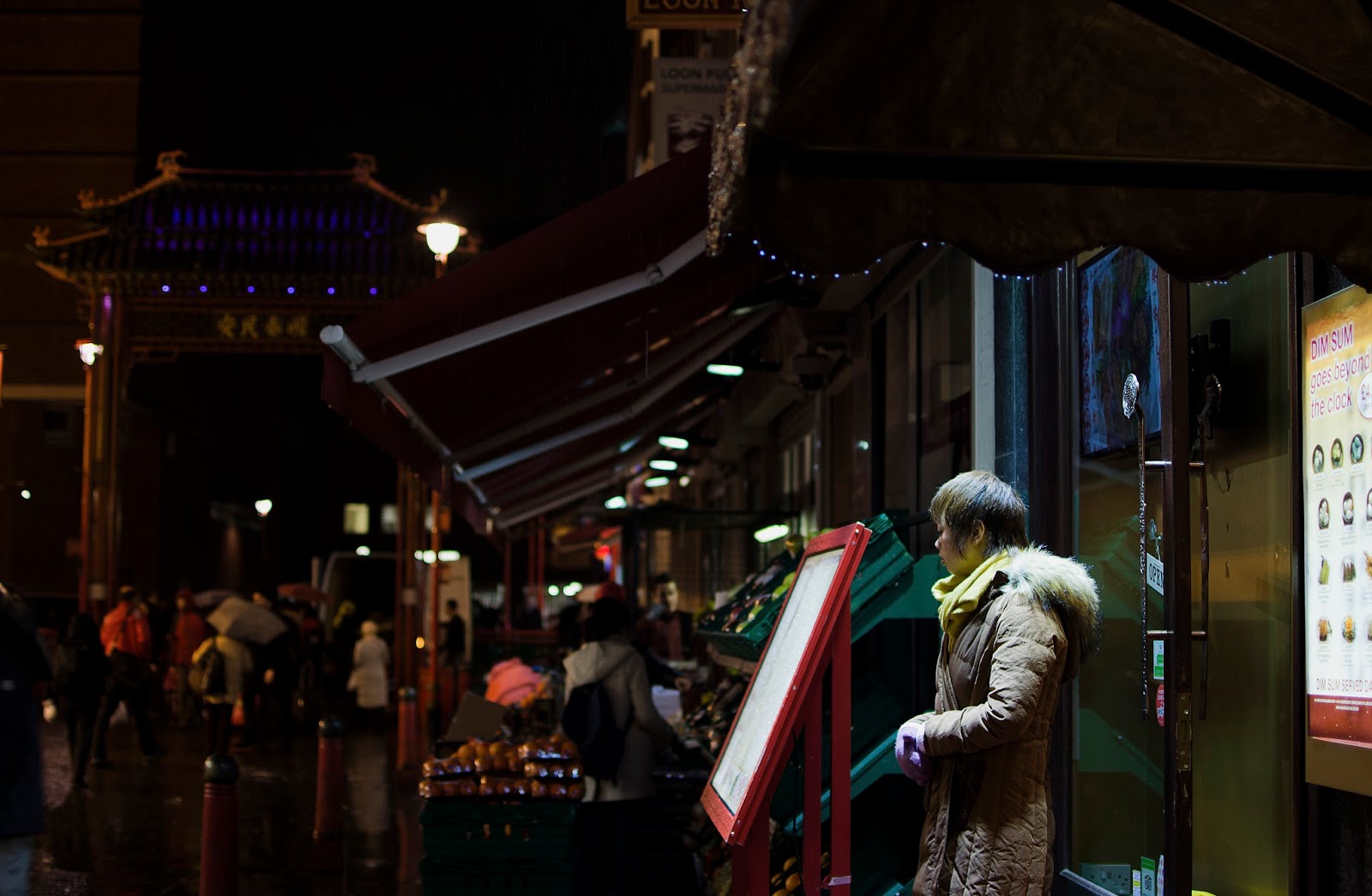
Task 3 in Unit 57 involved creating your final set of photographs that would be able to be published in a magazine. Your chosen photographs would have to be suitable with what the magazine covers e.g. Street Photography or Fashion.
Prior to having my final set of images there was research done in order for me to have a sense of what I wanted in my final set. Majority of the research involved was around street photographers as this was an area of photography that I had wanted to explore, as this was an interesting and challenging area to cover. After looking through several photographers and their’ works, I had come across a street photographer by the name of Lukasz Palka who was a street photographer in Japan, his photographs were able to capture private moments of people around the city of Tokyo and his subjects were interestingly framed. Furthermore his shots are very wide, allowing his entire subject to be within the frame from head to toe. Looking through his works had then led me to the decision of doing the same around London.
For equipment I had decided to use my reliable Nikon D5200, and for the lens I had decided to use a 35mm f/1.8. The reason I had chosen this particular lens was that it was a fixed prime lens, meaning that you are unable to zoom in out or out, which in turn forces you to get close to your subjects, and this was a habit I knew I would rely on if I had chosen to use a 18-55mm kit lens. Another reason as to why I had chosen the 35mm is because of its very wide aperture of f/1.8. A wider aperture means you are able to hold your ground in low light situations, and this was what I needed as I had planned to do most of my set in the evening. With its wide aperture it then meant this would have an impact on my depth of field. By having a lower number such as f/1.8 you are then able to have your subject stand out in the photograph, as by using a low f stop number you are then able to the background very blurry whilst maintaining your subject in focus.
I had decided to go with 64gb SDXC card as I knew I would be taking plenty of photographs, furthermore I was shooting in RAW which meant it took up more memory in comparison to a JPEG file and by shooting RAW his meant the photographs would be the highest of quality and this also meant I could edit the photos with minimal loss of quality.
Editing was done in Photoshop and it was very minimal, as I did not want to heavily change the image from its original, the usual procedure done to edit the photos was mostly adjusting the brightness, exposure, saturation, curves and clarity to give it a more balanced look.
The overall response towards my set were very positive, some comments towards some of the photographs were that they enjoyed the ‘vibrant colours’ or how they liked the use of ‘rule of thirds’ in the majority of the photos. The constructive criticism feedback given was something that I had agreed on. Some comments were that there were issues in terms of cropping and that some of my subjects in the photos were not fully within the frame, e.g. their feet were missing. During the project this was an issue I began to face when attempting to take several photographs. Though I had a 35mm lens this did not grant me an ultra wide look, and in several photos within the set I had to distance myself from my subject, but however this meant I was losing time to capture the moment, which in turn then forced me to take the picture early which resulted with them not being fully within the frame. Another comment was how a couple of images did not entirely match the set as their actions did not truly flow within the set. Looking back at the images I understood what they meant. The set was meant to be focused on capturing private moments, such as a couple holding hands or a girl having a snack in an awkward area, however some of the images did not display that and instead showed normal everyday actions such as a woman unlocking her bike.
In terms of how appropriate my photos would be in my chosen magazine I feel that the majority of the set would fit their theme as I had managed to capture moments that shows an interesting story behind them, and with the magazine I had chosen the majority of their images always have some of story behind them.
For improvement there would have been several changes I would make. Firstly is the lens, 35mm was a very useful lens in terms of capturing people, along with its wide aperture it was very useful to shoot at night. However the issue I came across was that it cropped my subjects, and this is because my camera is not a full frame camera, so even from a relatively distant vantage point it still did not have my subject within frame, and so to overcome that problem I would mostly like go for a 14mm lens which can offer me a wide photograph without my subject being cropped. The benefits of a 14mm means that I can take a picture of my subject from a much closer position in comparison to the 35mm in which I had to distance myself which resulted in rushed photographs. Another improvement I would make is my approach towards my set, during the days I went out to shoot I felt as if I was rushing to get a picture which resulted in photos that did not match the set. For next time I will take much more time on it, have more patience whilst doing a shoot and produce better images.